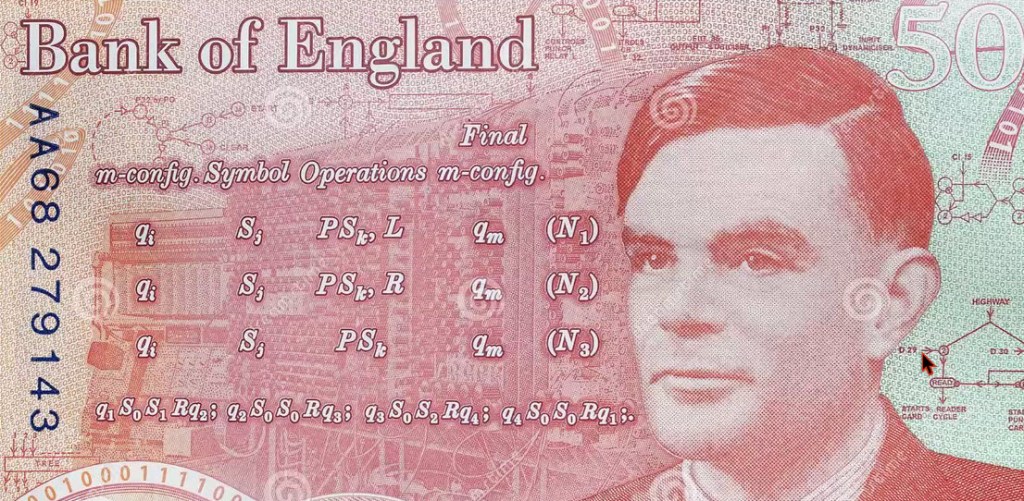
At the start of World War II, German U-boats were inflicting heavy losses on Allied ships. The Nazis coordinated their attacks by sending coded messages using an encryption system that “seemed to be unbreakable,” said Dan Sherman, an AARP Community Ambassador and expert on the subject.
“The British desperately wanted to break these codes, particularly the naval codes, because U-boats were out there in the North Atlantic” blowing up supply ships, Sherman said.
So the British government recruited teams of scientists to try to decipher the Germans’ Enigma code. Ultimately, a mathematician named Alan Turing came up with a strategy to crack the code and disrupt the Nazis’ war plans, said Sherman, a retired economist and popular instructor for the Lifelong Learning Institute of Virginia Tech.
He said historians estimate that Turing’s work, which remained secret for decades, “shortened the war by two years,” saving millions of lives. “The man was absolutely brilliant.”
Sherman, who holds a Ph.D. in economics from Cornell University and recently retired from the American Institutes for Research, discussed Turing’s role during a Nov. 7 webinar held by AARP Virginia in collaboration with the Lifelong Learning Institute. … [My article for AARP]